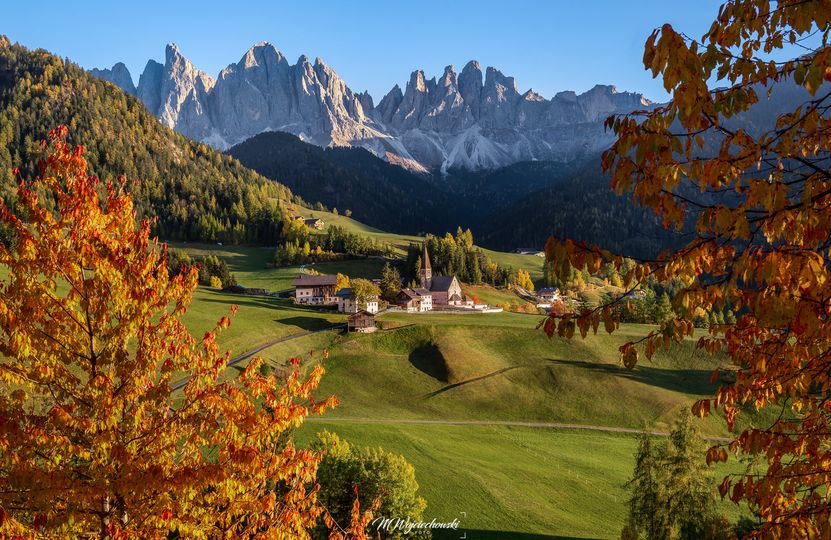
Photo: Maciej Wojciechowski (Santa Maddalena, Val di Funes, Dolomites, Italy)
Previous Lesson
Next Lesson
Author: Stephen Weller
696 words, 4 minutes read time
Same Wage for Less Work
Scripture: Matthew 20:8-15
In the previous lesson we saw a lot of activity in the vineyard as the master added workers throughout the day. Those workers did not all work the same number of hours and only the first group had agreed to a specific wage. In this lesson we will learn what the other four groups will be paid.
Mt 20:8 “And when evening came, the owner of the vineyard said to his foreman, ‘Call the laborers and pay them their wages, beginning with the last, up to the first.’ 9 And when those hired about the eleventh hour came, each of them received a denarius. 10 Now when those hired first came, they thought they would receive more, but each of them also received a denarius. 11 And on receiving it they grumbled at the master of the house, 12 saying, ‘These last worked only one hour, and you have made them equal to us who have borne the burden of the day and the scorching heat.’”
The owner of the vineyard provided work for many that day and made it a good day, especially for those who waited a long time for employment. Some worked all day and are probably tired from the work and the heat of the day while others worked no more than an hour. All who were hired were promised to be paid a fair wage.
Evening came and the days’ work was done, and it was time to pay the workers their wage. Instructions were given to the foreman to pay the workers, beginning with those hired last, up to the first. Those who were hired about the eleventh hour received a denarius for their labor, the same amount that those in the first group, who worked all day, had agreed to. Each group that came up to receive their wages all received the same amount. No matter how long one worked they were paid a full days’ wage.
If you had been in the first group and worked hard all day and realized that those who worked less received the same pay as you did, how would you feel? It didn’t take long for human nature to see this payment schedule as very unfair. Those in the last four groups would be thankful for receiving a full days’ wage, but even among them there would be a feeling of unfairness, but they probably did not complain because in reality they were over paid.
It was the first group that was really upset, who felt they should be paid more than those who worked a short time in the cool of the late afternoon. They brought their complaint to the landowner, but his response was not what the workers wanted to hear.
Mt 20:13 “But he replied to one of them, ‘Friend, I am doing you no wrong. Did you not agree with me for a denarius? 14 Take what belongs to you and go. I choose to give to this last worker as I give to you. 15 Am I not allowed to do what I choose with what belongs to me? Or do you begrudge my generosity?’”
The landowner was gentle in his response, pointing out that he had paid the agreed amount to them. He had done them no wrong. I am sure that they were happy at the beginning of the day to have a day of work at a full days’ wage. The landowner then pointed out that the workers were being paid with money that belonged to him. He was paying each worker for the work they did and then to help meet their need, he gave the rest to make a denarius as a gift to them.
Conclusion
Do you feel that the landowner was showing partiality in paying everyone the same wage? Was he being unfair to those who worked hard all day? How does this parable illustrate grace and mercy? Where do we see justice in this parable? We will consider this in the next lesson.
 Anchor My Faith
Leave a comment