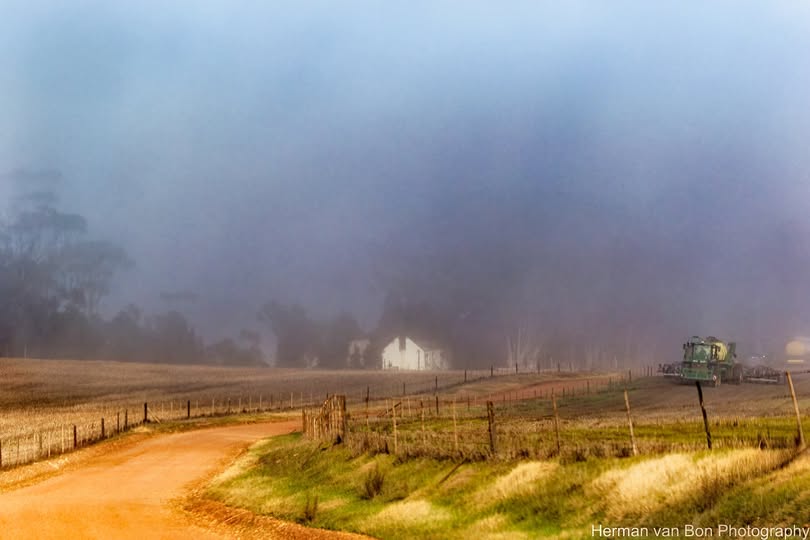
Herman van Bon (Good Morning in Napier, South Africa.
Author: Stephen Weller
1,108 words, 6 minutes read time
The Peaceful Fruit of Discipline
For the moment all discipline seems painful rather than pleasant, but later it yields the peaceful fruit of righteousness to those who have been trained by it. (Hebrews 12:11 ESV)
This verse is found at the end of a section about the role of a father who disciplines his son. The section begins with verse 3 and reminds us of the suffering Jesus endured from the hands of sinful men. We are further reminded in verse 4 that we have not yet struggled against sin to the point of shedding our blood. In light of this, we are then addressed as God’s sons in verses 5 and 6: 5 “My son, do not regard lightly the discipline of the Lord, nor be weary when reproved by him. 6 For the Lord disciplines the one he loves and chastises every son whom he receives.” As his sons, God disciplines us because he loves us, and that discipline is evidence that does love us and that we are indeed a child of his. That discipline is for our good, that we may share his holiness (verse 10).
As believers, we know that “all discipline seems painful rather than pleasant” and may come in the form of trials, even fiery trials. God can use those trials, as explained in James 1:2 – 4 ESV: 2 Count it all joy, my brothers, when you meet trials of various kinds, 3 for you know that the testing of your faith produces steadfastness. 4 And let steadfastness have its full effect, that you may be perfect and complete, lacking in nothing.” to bring about Christ-like character.
The “lacking in nothing” is the “character” we find in Romans 5:3 – 5 ESV: 3 “Not only that, but we rejoice in our sufferings, knowing that suffering produces endurance, 4 and endurance produces character, and character produces hope, 5 and hope does not put us to shame, because God’s love has been poured into our hearts through the Holy Spirit who has been given to us.” Discipline, maybe through trials, is used by God to mature us.
As we are trained by God’s discipline, the peaceful fruit of righteousness is produced. As we are trained by God, we gain wisdom from above; a wisdom that 17 “is first pure, then peaceable, gentle, open to reason, full of mercy and good fruits, impartial and sincere. 18 And a harvest of righteousness is sown in peace by those who make peace” (James 3:17 – 18 ESV). As God trains us in righteousness living our lives will become a display of the fruit of the Spirit, which is love with characteristics of “joy, peace, patience, kindness, goodness, faithfulness, gentleness, and self-control” (Galatians 5:21 – 22 ESV).
Father, I am concerned that with our hectic lifestyle, we are missing out in the enjoyment of the peaceful fruit of righteousness. It seems that we are not fully satisfied in God and as a result we turn to the world for further satisfaction and in the process, we miss the enjoyment you have for us.
The Following Addendum Is Provided by ChatGPT
Summary Theme
God’s loving discipline produces lasting righteousness and peace in those who are trained by it.
Summary Paragraph
In Hebrews 12:11, the writer acknowledges a universal truth: discipline is never pleasant in the moment; it brings pain, discomfort, and often resistance. Yet this temporary hardship serves a greater purpose. God’s discipline is not punitive but formative, shaping believers into spiritual maturity. Those who submit to and learn from it are “trained” by it, resulting in a harvest of righteousness, right living aligned with God’s will, and peace, an inner stability rooted in trust and obedience. This verse calls believers to look beyond present difficulty to the lasting spiritual fruit God is producing through His loving correction.
Discussion Questions with Extended Answers:
- Why does discipline feel painful rather than pleasant?
Answer:
Discipline confronts areas of our lives that need correction, our habits, attitudes, or desires, which naturally creates discomfort. It often requires change, sacrifice, or the surrender of control, all of which go against our human nature. From a spiritual perspective, discipline exposes sin and refines character, which can feel like loss or struggle in the moment. However, the pain is not without purpose; it is evidence that God is actively working in our lives as a loving Father, not abandoning us to harmful patterns. - What does it mean to be “trained” by discipline?
Answer:
To be “trained” implies an ongoing, intentional process, much like an athlete preparing for competition. It involves receiving correction, responding with humility, and allowing the experience to shape one’s character and behavior. Being trained by discipline means we do not merely endure hardship but learn from it; adjusting our lives according to God’s truth. This requires reflection, obedience, and perseverance. Over time, discipline becomes a tool that strengthens faith, deepens dependence on God, and produces spiritual maturity. - What is the “peaceful fruit of righteousness” mentioned in this verse?
Answer:
The “peaceful fruit of righteousness” refers to the visible and internal results of a life shaped by God’s discipline. Righteousness is right standing and right living before God, expressed in obedience, holiness, and integrity. Peace accompanies this righteousness because living in alignment with God removes inner conflict and fosters trust in His sovereignty. This peace is not merely the absence of trouble but a settled confidence in God’s goodness and control, even amid difficult circumstances. - How can believers maintain the right perspective during seasons of discipline?
Answer:
Believers maintain perspective by remembering God’s character and purpose. Discipline is an expression of His love (as emphasized earlier in Hebrews 12), not His rejection. Keeping an eternal perspective helps recognize that present discomfort leads to lasting spiritual gain. Prayer, Scripture, and fellowship with other believers can provide encouragement and clarity. Instead of asking, “Why is this happening to me?” believers can ask, “What is God teaching me through this?” This shift transforms discipline from a burden into an opportunity for growth. - How does this verse encourage perseverance in the Christian life?
Answer:
This verse assures believers that the struggles and corrections they face are meaningful and productive. Knowing that discipline leads to a “harvest” encourages perseverance because it promises future benefit. Just as a farmer patiently waits for crops to grow, believers are called to endure present hardship with hope. The certainty of spiritual fruit, righteousness and peace, motivates continued faithfulness, reminding us that God’s work in us is purposeful and will ultimately result in good.


Leave a comment