image Genealogy
Genealogy and the Believer
Stephen Weller
Ancestry is your lineage or family line, while genealogy is the study and documentation of that lineage.
What does the Bible say about our study of genealogy?
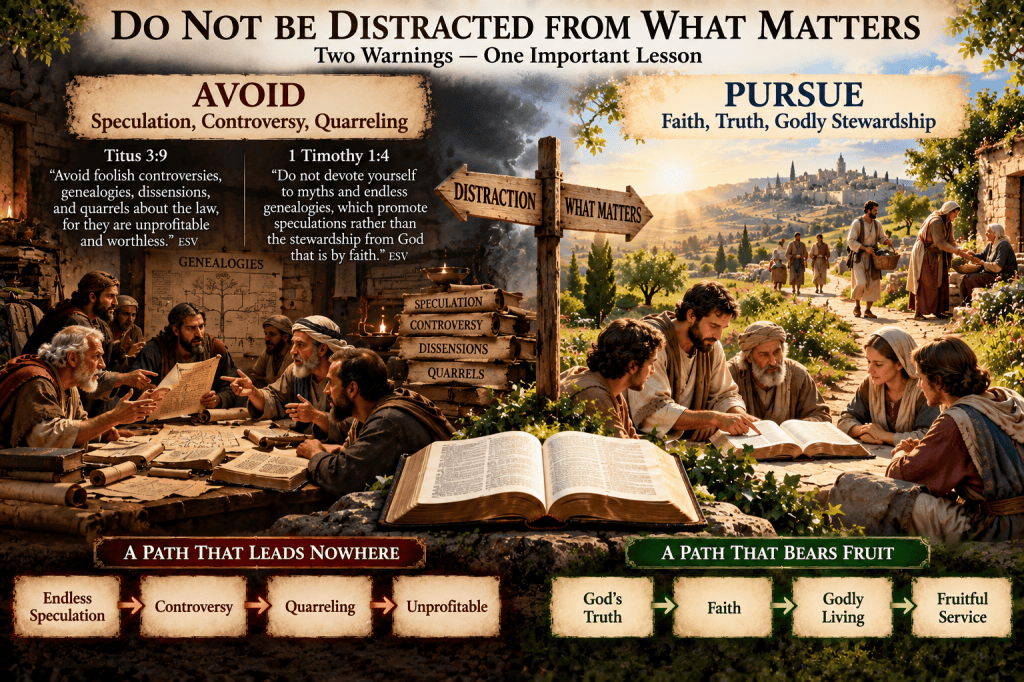
Titus 3:9
“But avoid foolish controversies and genealogies and arguments and quarrels about the law, because these are unprofitable and useless.”
Paul tells Titus that some people were wasting time on:
- speculative genealogies
- spiritual pedigrees
- ancestry‑based arguments
- debates rooted in pride rather than truth
These discussions distracted from the gospel and produced division rather than growth.
A second related verse
There is another similar warning:
1 Timothy 1:4
“…nor to devote themselves to myths and endless genealogies, which promote speculations rather than the stewardship from God that is by faith.” (cross‑referenced in the same source)
Why Paul warned about genealogies
In the early church, some teachers:
- tried to build spiritual authority based on ancestry
- used genealogies to support myths or speculative teachings
- created divisions by elevating certain lineages
Paul’s instruction is simple: Don’t waste time on debates that don’t build faith or advance the gospel.
Do these speculative genealogies possibly relate to our time spent on family genealogies? If a person appears to value working on genealogies more than learning the Bible, might this be a problem?
This is a wise and pastoral question. The short answer is yes, the warnings about “endless genealogies” can apply to modern family‑tree obsession, but only in certain situations.
Let’s look at this clearly and biblically.
What Paul Meant by “Endless Genealogies”
In 1 Timothy 1:4 and Titus 3:9, Paul wasn’t condemning normal family history. He was warning against:
- speculative spiritual pedigrees
- mystical ancestry claims
- genealogies used to create pride, status, or false teaching
- debates that distracted from the gospel
In other words, genealogy became a spiritual distraction; a way to avoid the real work of knowing God.
Can this apply to modern family genealogy?
Yes — when genealogy becomes a substitute for spiritual growth.
Family research is not sinful. It can be meaningful, historical, and even spiritually enriching when it helps someone appreciate God’s providence across generations.
But it becomes a problem when:
- it consumes more passion than Scripture
- it becomes a person’s identity
- it replaces time in the Word
- it becomes an obsession
- it becomes a source of pride
- it distracts from spiritual priorities
- it becomes a way to avoid dealing with God personally
Paul’s warning applies whenever a good thing becomes a controlling thing.
If a person appears to value working on genealogies more than learning the Bible, then that is exactly the kind of imbalance Paul was addressing. Not because genealogy is wrong, but because anything that consistently takes priority over God’s Word becomes spiritually unhealthy.
It’s similar to:
- someone who spends all their time on hobbies
- someone who is consumed with politics
- someone who is absorbed in sports
- someone who is obsessed with finances
None of these are sinful in themselves. But when they replace Scripture, prayer, and spiritual growth, they become a distraction from God.
A simple way to express this biblically
We could summarize Paul’s warning like this:
“Genealogy is fine, but when it becomes endless, speculative, or more important than knowing God, it becomes spiritually unprofitable.”
A gentle pastoral insight
Sometimes people choose genealogy because:
- it feels productive
- it gives them a sense of identity
- it avoids the conviction of Scripture
- it is emotionally safer than dealing with God
- it fills a void that Scripture is meant to fill
In those cases, genealogy becomes a spiritual escape.


Leave a comment