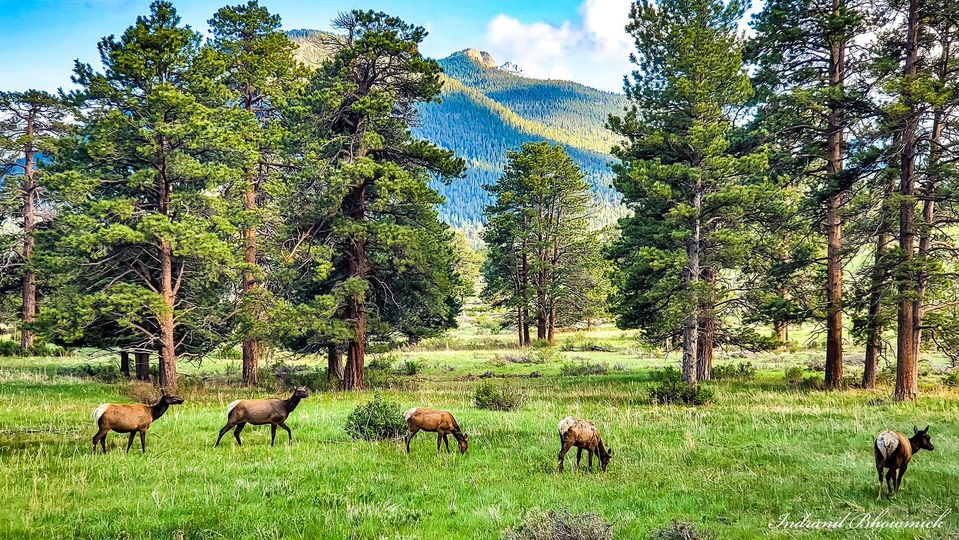
Indranil Bhowmick (Rocky Mountain National Park)
dv0826-Daily Verse
Author: Stephen Weller
Facilitator: Stephen Weller
1,763 words, 9 minutes read time
Encouragement
The encouragement of Psalm 91:2 is simple, strong, and deeply personal: God Himself becomes your safe place.
When you say, “He is my refuge and my fortress,” you are declaring that God is both your shelter and your strength.
1. God is your refuge — a place to run
A refuge is where you go when life feels overwhelming. It means:
- You are not exposed
- You are not alone
- You are not unprotected
God welcomes you into His covering presence.
2. God is your fortress — a place to stand
A fortress is not just protection; it is stability.
- You can stand firm
- You can resist fear
- You can face what comes with confidence
His strength becomes your strength.
3. God invites personal trust
The verse says, “My God, in Him I will trust.” This is not theory—it is relationship.
- You can trust His heart
- You can trust His timing
- You can trust His promises
Trust turns protection into peace.
4. God’s protection is active, not passive
Psalm 91 doesn’t picture God as distant. He is:
- Covering
- Guarding
- Rescuing
- Shielding
- Surrounding
His care is constant and intentional.
A devotional encouragement for today
Psalm 91:2 encourages you to speak faith out loud: “Lord, You are my refuge when I feel vulnerable, and my fortress when I feel weak. I trust You today.”
When you declare who God is, your heart remembers what is true.
God Is My Refuge and Fortress
Bible Lesson
I will say to the Lord, “My refuge and my fortress, my God, in whom I trust.” (Psalm 91:2 ESV)
Verses 1 and 2 sets the basic theme of Psalm 91, which is the Lord is a secure defense for those who take refuge in him. As the believer faces dangers and challenges in life, God provides shelter where one is hidden from danger (verse 1). Under the shadow of his wing is found safety and refuge (verses 1, 2, 4 and 9). God is a fortress and provides protection from attack (verse 2).
A refuge is a place of shelter or protection from danger or distress. “The Lord is good, a stronghold in the day of trouble; he knows those who take refuge in him” (Nahum 1:7 ESV). “Every word of God proves true; he is a shield to those who take refuge in him” (Proverbs 30:5 ESV). “This God—his way is perfect; the word of the Lord proves true; he is a shield for all those who take refuge in him” (2 Samuel 22:31 ESV). In the ESV translation “refuge is used 95 times with 47 of those found in Psalms. This link provides a list of those 47 verses and provides encouraging reading.
A fortress is a fortified place, often referred to as a stronghold; a place of protection, but God is so much more than that as we see in 2 Samuel 22:2 – 4 ESV: 2 “The Lord is my rock and my fortress and my deliverer, 3 my God, my rock, in whom I take refuge, my shield, and the horn of my salvation, my stronghold and my refuge, my savior; you save me from violence. 4 I call upon the Lord, who is worthy to be praised, and I am saved from my enemies.” Using fortress in a prayer, one could pray, “Incline your ear to me; rescue me speedily! Be a rock of refuge for me, a strong fortress to save me!” (Psalm 31:2 ESV). We can use fortress in our praise, “O my Strength, I will sing praises to you, for you, O God, are my fortress, the God who shows me steadfast love” (Psalm 59:17 ESV).
For the Lord to be my refuge and my fortress, he is to be my God in whom I trust. To trust in God is to have a firm belief in his reliability, truth, ability and strength. This belief comes from knowing his character. Jesus knew the character of his Father and could trust him even when he became sin for us, and his Father turned his back on him. We see this in Matthew 27:43 ESV: “He trusts in God; let God deliver him now, if he desires him. For he said, ‘I am the Son of God.’”
Lord thank you for being my refuge and my fortress in the face of danger.
Material Added to Original Lesson – AI
Theme, Summary Paragraph, and Questions with Answers
Summary Theme:
Confident Trust in God’s Protection and Faithfulness
Key Verse (ESV):
“I will say to the LORD, ‘My refuge and my fortress, my God, in whom I trust.’” — Psalm 91:2
Summary Paragraph
Psalm 91:2 is a personal declaration of confidence in God. The psalmist does not merely acknowledge that God can provide protection; he claims Him personally as “my refuge,” “my fortress,” and “my God.” A refuge is a place to which we flee when danger threatens, while a fortress represents strength and security against an enemy. Together, these images portray God as both the One who welcomes His people into safety and the One strong enough to defend them. The final words, “in whom I trust,” reveal the heart of the verse. Biblical trust does not mean that believers will never encounter suffering, uncertainty, or danger. Rather, it means that in every circumstance they can place their lives confidently in the hands of the sovereign and faithful God. Our security ultimately rests not in favorable circumstances but in the character of the God to whom we belong.
Discussion Questions with Extended Answers
1. What does it mean to call the Lord “my refuge”?
Answer:
Calling the Lord “my refuge” means recognizing God as the One to whom we can turn when life becomes frightening, uncertain, painful, or overwhelming. In biblical times, a refuge was a place of shelter from danger. Spiritually, God Himself becomes that place of safety for His people.
Notice that the psalmist does not merely say that God provides a refuge. He says God is “my refuge.” The emphasis is relational and personal. Faith does not simply believe facts about God; faith turns toward God and rests in Him. When circumstances are beyond our control, we can bring our fears, burdens, and uncertainties directly to Him. Our refuge is ultimately not a place, possession, plan, or human solution—it is the Lord Himself.
2. Why does the psalmist describe God as both a “refuge” and a “fortress”?
Answer:
These two images emphasize complementary aspects of God’s care. A refuge emphasizes shelter: God receives His people when they seek Him. A fortress emphasizes strength: God is powerful enough to defend and preserve those who belong to Him.
The imagery reminds us that God’s protection is not based upon human strength. A fortress was designed to withstand attacks that individuals could never withstand on their own. Likewise, believers inevitably encounter circumstances greater than their own abilities. Psalm 91 directs us away from self-reliance and toward confidence in God’s strength. We may be vulnerable, but our God is not. We may not know what tomorrow holds, but nothing that tomorrow brings will exceed God’s sovereignty or power.
3. What is significant about the repeated word “my” in this verse?
Answer:
The psalmist says “my refuge,” “my fortress,” and “my God.” This makes Psalm 91:2 much more than a theological statement about God’s attributes. It is a confession of a personal relationship with Him.
There is an important difference between knowing that God is trustworthy and personally trusting Him. Scripture can teach us that God is faithful, powerful, sovereign, and loving, but faith responds by saying, He is my God, and I will trust Him. The psalmist has moved from knowledge about God to dependence upon God. This is one of the great movements of biblical faith: what we know to be true about God becomes the foundation upon which we personally rest our lives.
4. What does “in whom I trust” teach us about biblical faith?
Answer:
Trust involves placing confidence in God’s character even when we cannot see how circumstances will unfold. The psalmist does not say, “I trust because I understand everything God is doing.” He simply declares that God is the One “in whom I trust.”
This distinction is important because faith is often tested precisely when circumstances do not make sense. We naturally want visible evidence that everything will work out as we desire. Biblical faith goes deeper. It rests upon what we know about God—His wisdom, goodness, power, faithfulness, and sovereignty. Trust says, I may not understand what God is doing, but I know who God is. Therefore, confidence in God can remain even when confidence in circumstances disappears.
5. Does Psalm 91:2 promise that believers will never experience suffering or danger?
Answer:
No. Scripture repeatedly shows faithful people experiencing hardship, persecution, illness, loss, and even death. Psalm 91 should therefore not be understood as a guarantee that those who trust God will never encounter painful circumstances.
Instead, the psalm teaches that no circumstance can place God’s people beyond His sovereign care. Sometimes God protects His people from danger; sometimes He carries them through danger. In either case, their ultimate security remains in Him. The greatest protection God provides is not necessarily freedom from every earthly difficulty but the assurance that nothing can separate His people from Him or defeat His purposes for them.
6. How can we practically make God our refuge during difficult circumstances?
Answer:
We make God our refuge by deliberately turning toward Him rather than allowing fear to become our controlling response. This includes praying honestly, remembering God’s promises, meditating on Scripture, recalling His past faithfulness, and entrusting circumstances to Him that we cannot control.
Psalm 91:2 itself provides a helpful example because the psalmist speaks his confidence: “I will say to the LORD.” There are times when believers need to remind themselves deliberately of what they know about God. When fear says, You are alone, faith answers, The Lord is my refuge. When circumstances say, You are defenseless, faith answers, The Lord is my fortress. When uncertainty says, You cannot know what will happen, faith answers, He is my God, in whom I trust. Such declarations do not deny reality; they place reality beneath the greater truth of who God is.
Central Truth
Our confidence does not come from knowing that trouble will never reach us, but from knowing that whatever comes, the Lord remains our refuge, our fortress, and our God.


Leave a Reply