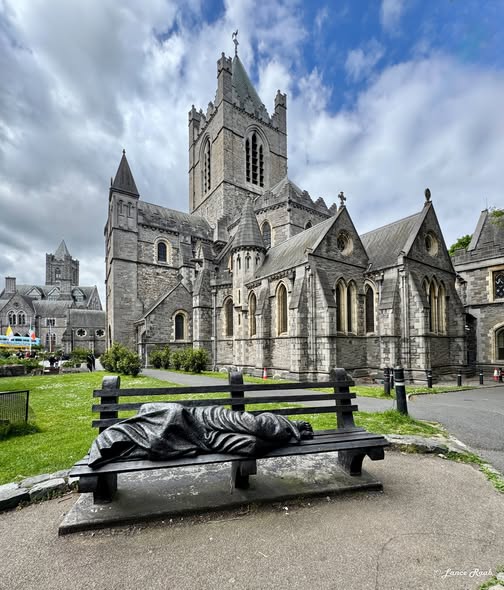
Lance Raab Photography (Christ Church Cathedral, Dublin, Ireland. The bronze statue, known as Homeless Jesus, was installed in 2015)
dbr1-0801 Daily Read
Facilitator: Stephen Weller
1,300 words, 7 minutes read time
Previous Lesson
Next Lesson
Nations Brought Low Under God’s Sovereign Hand
How This Title Relates to Isaiah 16–18
- Isaiah 16 — Moab’s Pride Humbled Moab seeks refuge but refuses full submission to God. Their downfall reveals how human pride collapses when confronted by divine judgment.
- Isaiah 17 — Damascus Falls and a Remnant Returns Damascus, a symbol of ancient strength, is reduced to ruin. Yet within the shaking, a remnant remembers their Maker — showing that God’s sovereignty both judges and restores.
- Isaiah 18 — Cush Waits Under God’s Watchful Timing Cush is reminded that God sees, waits, and acts at the perfect moment. Even powerful nations must stand still before His purposes.
Why This Title Fits All Three Chapters
Across Moab, Damascus, and Cush, Isaiah presents a unified message: Every nation, no matter how proud or powerful, is subject to the Lord’s sovereign rule. Their trembling highlights His authority; their collapse reveals His justice; their future hope rests in His timing.
Isaiah 16: Moab’s Pride, Judgment, and the Promise of the Righteous King
Overview:
Isaiah 16 continues the prophecy against Moab, a nation descended from Lot that often opposed Israel. The chapter describes Moab’s desperate attempt to escape coming judgment by seeking protection from Judah and appealing to the throne of David. Isaiah reveals that Moab’s suffering is connected to its pride and refusal to humble itself before God. Yet, within this message of judgment is a promise of hope: a righteous ruler from the line of David will establish a kingdom marked by steadfast love, faithfulness, justice, and righteousness. This points forward to Jesus Christ, the promised Messiah who reigns with perfect authority and mercy.
Theological Themes:
• God Judges the Pride of Nations
Moab’s downfall demonstrates that arrogance and self-confidence cannot stand before the holiness and authority of God.
• God Offers Mercy Even During Judgment
The invitation to seek refuge under David’s throne reveals God’s willingness to provide a way of salvation.
• The Davidic King Will Rule in Righteousness
God’s promise of a faithful ruler points to the coming Messiah and His eternal kingdom.
• True Refuge Is Found in God Alone
Human alliances and political strength cannot provide lasting security.
Key Verse:
Isaiah 16:5 –
“Then a throne will be established in steadfast love, and on it will sit in faithfulness in the tent of David one who judges and seeks justice and is swift to do righteousness.”
Discussion Questions with Answers:
1. Why did God bring judgment upon Moab?
Answer:
God judged Moab because of its pride, arrogance, and reliance on its own strength. Moab’s wealth, cities, and influence had caused it to believe it could exist independently of God. Isaiah shows that pride blinds people to their need for God and eventually leads to destruction.
2. How does Isaiah 16:5 point to Jesus Christ?
Answer:
Isaiah 16:5 describes a future ruler from the line of David who will govern with perfect justice and righteousness. This promise reaches its ultimate fulfillment in Jesus, the Son of David, whose kingdom is established on love, truth, and holiness rather than human power.
3. What lesson can believers learn from Moab?
Answer:
Believers learn that security cannot be found in possessions, achievements, or human relationships alone. God calls His people to humility and dependence upon Him because He alone provides lasting protection and hope.
Isaiah 17: The Fall of Human Power and the Return to the Creator
Overview:
Isaiah 17 presents God’s judgment against Damascus and the northern kingdom of Israel. These nations had placed their confidence in military alliances and human strength rather than trusting the Lord. Isaiah describes their cities becoming desolate and their power fading away. However, the chapter also reveals a message of restoration: after experiencing judgment, people will turn back to their Maker and look again to the Holy One of Israel. God’s discipline is not only an act of justice but also an invitation for His people to return to Him.
Theological Themes:
• God Is Sovereign Over Nations and Kingdoms
Human governments and alliances remain under God’s authority.
• Human Strength Cannot Replace Faith in God
Israel’s dependence on political solutions led them away from dependence on the Lord.
• God Uses Judgment to Bring Repentance
Discipline can become a means through which people recognize their need for God.
• The Creator Alone Deserves Worship
God calls people away from idols and back to Himself.
Key Verse:
Isaiah 17:7 –
“In that day man will look to his Maker, and his eyes will look on the Holy One of Israel.”
Discussion Questions with Answers:
1. Why did Damascus and Israel experience destruction?
Answer:
They experienced destruction because they trusted in their alliances, military power, and false sources of security rather than God. Their failure demonstrates that human strength is temporary and cannot replace dependence on the Lord.
2. What does it mean to “look to his Maker”?
Answer:
To look to God means to recognize Him as the source of life, salvation, and hope. It represents repentance, faith, and a renewed relationship with the Creator rather than dependence on idols or human solutions.
3. How can believers today avoid Israel’s mistake?
Answer:
Believers avoid Israel’s mistake by continually placing their trust in God rather than allowing success, possessions, or human resources to become their foundation. God may use earthly resources, but He must remain the ultimate source of confidence and security.
Isaiah 18: God’s Rule Over the Nations and His Global Purpose
Overview:
Isaiah 18 delivers a message concerning Cush, a powerful nation south of Egypt. The nation appears impressive because of its strength and influence, but Isaiah reminds them that God is watching over all nations and directing history according to His purposes. The chapter emphasizes that earthly power is temporary, while God’s authority is eternal. The prophecy concludes with a picture of nations bringing tribute to the Lord at Mount Zion, pointing toward the future recognition of God’s glory among all peoples.
Theological Themes:
• God Rules Over Every Nation
No kingdom or empire exists outside the authority of the Lord.
• God Works According to His Perfect Timing
The Lord observes, waits, and acts according to His wisdom.
• All Nations Are Called to Recognize God’s Glory
God’s plan extends beyond Israel to every people group.
• God’s Kingdom Will Ultimately Triumph
Earthly kingdoms fade, but God’s eternal kingdom will endure.
Key Verse:
Isaiah 18:7 –
“At that time tribute will be brought to the LORD of hosts from a people tall and smooth, from a people feared near and far, a nation mighty and conquering, whose land the rivers divide, to Mount Zion, the place of the name of the LORD of hosts.”
Discussion Questions with Answers:
1. What does Isaiah 18 teach about God’s authority?
Answer:
Isaiah 18 teaches that God is the true ruler over all nations. Political power, military strength, and national achievements are temporary, but God directs history according to His eternal purposes.
2. Why does God sometimes wait before acting?
Answer:
God waits because He is perfectly wise and patient. His timing allows opportunities for repentance and demonstrates that His actions are guided by justice rather than human emotion or impatience.
3. How does Isaiah 18 point toward God’s mission for all people?
Answer:
Isaiah 18 reveals that God’s purpose includes every nation worshiping Him. This theme continues throughout Scripture and finds fulfillment in Revelation’s picture of people from every tribe, language, and nation gathered before God’s throne.
Summary Thought:
Isaiah 16–18 reveals that God is the sovereign King over every nation. He humbles human pride, calls people back to Himself, and promises a righteous kingdom through the Messiah that will bring hope and salvation to all peoples.


Leave a comment