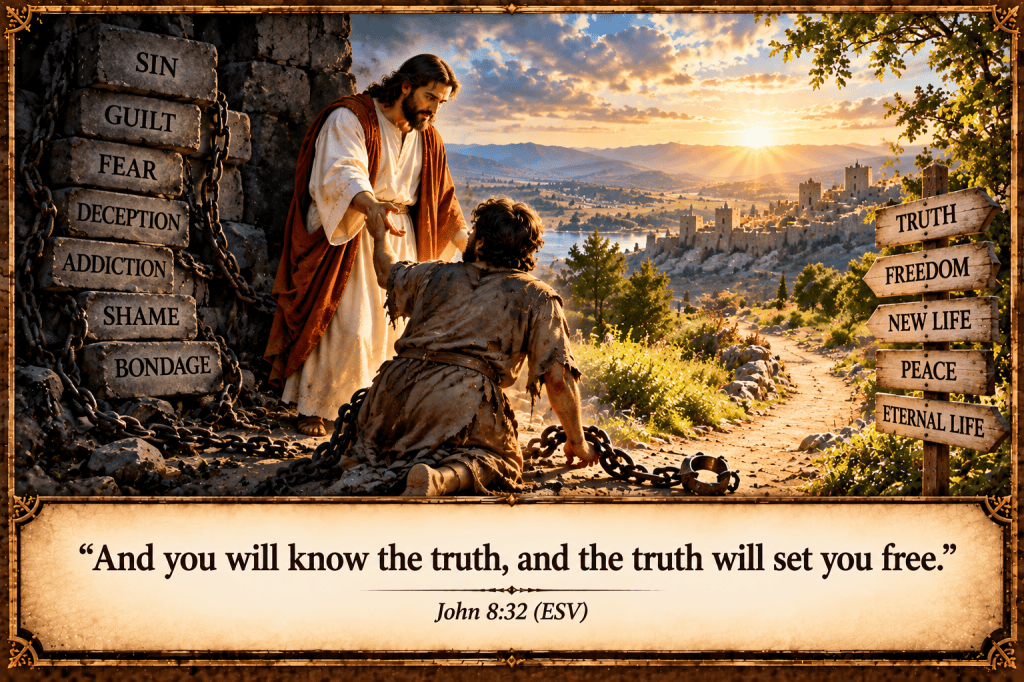
image John 8:32
dv1009-Daily Verse
Author: Stephen Weller
Facilitator: Stephen Weller
2,316 words, 12 minutes read time
Truth and Freedom
Encouragement
John 8:32 says:
“And you shall know the truth, and the truth shall make you free.” (NKJV)
This verse offers powerful encouragement because it reminds us that true freedom comes from knowing and embracing God’s truth.
A few ways this can encourage us:
- Freedom from deception: We do not have to be controlled by lies, confusion, or false beliefs. God’s truth provides clarity and direction.
- Freedom from guilt and sin’s power: In the context of John 8, Jesus was teaching that He came to free people from the bondage of sin. Through Him, forgiveness and a new life are possible.
- Freedom from fear: When we know God’s character, promises, and purposes, we can face uncertainty with greater confidence.
- Freedom to live authentically: Truth enables us to become the people God created us to be, rather than being shaped by the expectations or pressures of others.
The encouragement is not merely that truth exists, but that Jesus Himself is the source of that truth. Later in John’s Gospel, Jesus says, “I am the way, the truth, and the life” (John 14:6). As we grow in our relationship with Him and His Word, we experience increasing spiritual freedom.
Devotional thought:
When circumstances feel restrictive or confusing, John 8:32 reminds us that freedom begins with knowing Christ and trusting His truth. The more we allow God’s truth to shape our thinking, the less power fear, guilt, and deception have over our lives. True freedom is not simply the absence of problems; it is the presence of God’s truth guiding us through them.
Bible Lesson
“and you will know the truth, and the truth will set you free.” (John 8:32 ESV)
The “and” at the beginning of the verse points to what is necessary to know the truth that will set one free. Looking at the whole sentence we read, 31 “If you abide in my word, you are truly my disciples, 32 and you will know the truth, and the truth will set you free.”
Possible evidence of being a disciple of Jesus Christ is that one abides, or remains in, his word. In John 15:7 an additional condition is added to one abiding in the word, and that is the word must abide in you. If it does, then what you are learning will live out in what you say and how you behave. This is clarified in 2 John 9 ESV: “Everyone who goes on ahead and does not abide in the teaching of Christ, does not have God. Whoever abides in the teaching has both the Father and the Son.” That truth that abides in us “will be with us forever” (2 John 2 ESV).
There are many cross references to “the truth will set you free.” Let’s paraphrase some of them as follows:
- John 8:36: If the Son sets us free by our abiding in him, we will be free indeed.
- Romans 6:18: Having been set free from sin through being redeemed, we have become slaves of righteousness.
- Romans 6:22 ESV: “But now that you have been set free from sin and have become slaves of God, the fruit you get leads to sanctification and its end, eternal life.”
- Galatians 5:13: If we have been set free then do not use that freedom as an opportunity for the flesh to sin, but instead through love serve one another.
- 1 Peter 2:16: If we are free then live as people who are free, not using our freedom as a cover-up for evil, but live as servants of God.
Jesus claimed to be the truth and to know the truth is to know Jesus and to know Jesus is to know about salvation and to obtain our salvation we are set free from the bondage of sin. Another way of saying “the truth will set you free” is to say, “Jesus will set you free” and that freedom is from our bondage to sin and our judgment under the law for our sin.
As we abide in the word we will know the truth and if the word abides in us we will find salvation and are then set free from our bondage to sin and if we continue to abide in the word our freedom will continue to grow as sin loosen its grip on our lives.
Questions with Answers
“And you will know the truth, and the truth will set you free.” — John 8:32
1. What does Jesus mean when He says, “You will know the truth”?
Answer:
Jesus is speaking about more than simply acquiring knowledge or understanding factual information. The truth He describes is the divine truth revealed through His person, His teachings, and His relationship with the Father. To know this truth means to recognize Jesus as the Son of God, believe His Word, and develop a personal relationship with Him.
In John 8:31, Jesus explains that those who abide in His Word are truly His disciples. This establishes an important connection between knowing the truth and remaining faithful to His teachings. Genuine knowledge of God’s truth is not merely intellectual agreement; it involves accepting His Word and allowing it to transform one’s beliefs, attitudes, and actions.
Later, in John 14:6, Jesus declares that He is the way, the truth, and the life. Therefore, knowing the truth ultimately means knowing Christ Himself. Through Him, believers gain an understanding of God’s character, His plan of salvation, and His purpose for their lives.
2. What kind of freedom does Jesus promise when He says, “The truth will set you free”?
Answer:
The freedom Jesus promises is primarily spiritual freedom from the bondage of sin. In John 8:34, Jesus explains that everyone who practices sin is a slave to sin. His statement reveals that humanity’s greatest captivity is not necessarily political oppression, physical imprisonment, or difficult circumstances, but the spiritual condition of being controlled by sin.
Sin enslaves individuals through sinful desires, deception, guilt, and separation from God. People may believe they possess complete freedom because they can make their own choices, yet without Christ, they remain subject to sin’s influence and consequences.
Jesus offers a freedom that reaches the deepest needs of the human heart. Through His sacrificial death and resurrection, believers receive forgiveness, reconciliation with God, and liberation from sin’s dominion.
This freedom does not mean believers will never struggle with temptation or commit another sin. Rather, they are no longer under sin’s ultimate authority. They are empowered through the Holy Spirit to pursue righteousness and live in obedience to God.
3. Why is abiding in Jesus’ Word essential to experiencing the freedom described in John 8:32?
Answer:
The immediate context of John 8:32 is essential for understanding Jesus’ promise. In John 8:31, He tells those who have believed Him that remaining in His Word is evidence of genuine discipleship. Knowing the truth and experiencing spiritual freedom are therefore connected to a continuing relationship with His teachings.
To abide in Jesus’ Word means to remain steadfast in His truth, consistently study Scripture, trust His promises, and apply His commands to everyday life. It involves more than occasional exposure to biblical teaching; it describes a continuing commitment to living under the authority of God’s Word.
As believers grow in their understanding of Scripture, they become better equipped to recognize deception, resist temptation, and distinguish God’s wisdom from the world’s values.
Abiding in Christ’s Word does not earn salvation. Instead, it demonstrates genuine faith and allows believers to experience the transforming influence of the truth they have received.
4. How does the truth of Jesus Christ free believers from deception and false beliefs?
Answer:
Deception is one of the primary ways sin maintains its influence over human lives. False beliefs about God, human nature, morality, and salvation can lead individuals away from the life God intends for them.
In John 8:44, Jesus identifies the devil as a liar and the father of lies. This contrast between divine truth and spiritual deception helps explain why knowing God’s truth is essential for freedom.
The teachings of Jesus expose false assumptions and replace them with an accurate understanding of God and His purposes. For example, the world may suggest that lasting fulfillment comes through wealth, personal achievement, pleasure, or independence from moral authority. Jesus teaches that true life is found through faith in Him and obedience to the Father.
God’s truth also corrects misconceptions about salvation. Humanity cannot achieve righteousness through personal effort or good works. Salvation comes through God’s grace and is received through faith in Jesus Christ.
As believers become grounded in biblical truth, they develop spiritual discernment. They are increasingly able to recognize teachings and influences that contradict Scripture and make decisions consistent with God’s will.
5. How is spiritual freedom different from the world’s understanding of freedom?
Answer:
The world frequently defines freedom as the ability to act independently, make personal choices without restriction, and pursue individual desires. Although personal liberty has genuine value, Jesus describes a deeper freedom that concerns humanity’s relationship with God.
According to Scripture, unrestricted personal choice does not necessarily produce genuine freedom. When people follow sinful desires without restraint, they may become increasingly controlled by those very desires.
In Romans 6:16–18, Paul explains that people become servants of whatever they obey. He contrasts slavery to sin with obedience that leads to righteousness. Those who have been set free from sin become servants of righteousness.
Christian freedom is therefore not permission to live without moral boundaries. It is liberation from sin so that believers can willingly serve God.
This distinction reveals an important spiritual principle: True freedom is not the absence of God’s authority but the ability to live according to His truth.
When believers submit to Christ, they discover that His commands are not intended to enslave them but to guide them toward holiness, peace, and a meaningful relationship with God.
6. Why did some of Jesus’ listeners struggle to understand His promise of freedom?
Answer:
In John 8:33, Jesus’ listeners respond by appealing to their descent from Abraham and questioning why they would need to be set free. Their response demonstrates that they understood His statement primarily in terms of social status, ancestry, or external bondage.
They believed their identity as Abraham’s descendants provided them with a privileged spiritual position. However, Jesus challenged this assumption by explaining that everyone who practices sin is a slave to sin.
Their misunderstanding reveals the danger of depending on religious heritage, traditions, or personal righteousness rather than recognizing the need for spiritual redemption.
Jesus teaches that freedom cannot be inherited through ancestry or obtained through religious association. It must come through the Son of God.
In John 8:36, He declares that if the Son sets someone free, that person will be free indeed. This statement identifies Jesus as the ultimate source of the freedom promised in John 8:32.
The lesson remains relevant today. Church membership, family traditions, biblical knowledge, and outward religious activity cannot substitute for genuine faith in Christ.
7. How does knowing God’s truth transform a believer’s daily life?
Answer:
Knowing God’s truth produces practical changes in how believers think, speak, make decisions, and relate to others. As Scripture shapes their understanding, they begin to evaluate life’s circumstances through the perspective of God’s character and promises.
Truth transforms the mind by correcting sinful attitudes and replacing worldly thinking with biblical wisdom. Romans 12:2 describes this process as the renewal of the mind, through which believers learn to discern God’s will.
Truth also influences behavior. A believer who understands God’s command to forgive is challenged to release bitterness. Someone who recognizes God’s faithfulness can respond to uncertainty with greater trust. A person who understands God’s standard of righteousness becomes more sensitive to sinful choices and more willing to repent.
This transformation is generally progressive. Spiritual maturity develops as believers continually return to God’s Word, depend upon the Holy Spirit, and practice obedience.
The freedom Jesus promises becomes increasingly evident as believers experience greater victory over sinful habits, freedom from destructive patterns of thinking, and a growing desire to honor God.
8. What encouragement does John 8:32 provide for believers who struggle with sin, guilt, or spiritual uncertainty?
Answer:
John 8:32 provides profound encouragement because it reminds believers that spiritual freedom rests upon the truth of Jesus Christ rather than their own strength or perfection.
Those struggling with sin can find hope in knowing that Christ has broken sin’s ultimate power. Although temptation remains a reality, believers are not helpless captives. Through the Holy Spirit, they can resist temptation, repent when they fail, and continue growing in righteousness.
Those burdened by guilt can remember that forgiveness is available through Christ’s sacrifice. First John 1:9 teaches that God is faithful and just to forgive those who confess their sins and cleanse them from unrighteousness.
For believers experiencing spiritual uncertainty, Jesus’ promise encourages continued confidence in His Word. Feelings and circumstances may change, but God’s truth remains dependable.
The assurance of John 8:32 is that freedom is not achieved through human determination alone. It is found through a genuine relationship with Jesus Christ, who reveals the truth and possesses the authority to set sinners free.
Believers can therefore approach each day with hope, knowing that God’s truth continues to guide, correct, strengthen, and transform their lives.
Concluding Spiritual Truth
John 8:32 teaches that genuine freedom comes through knowing Jesus Christ and remaining faithful to His Word. The truth of God exposes deception, reveals humanity’s need for salvation, and leads believers into freedom from the dominion of sin. This freedom is not independence from God’s authority but liberation to live in obedience, righteousness, and fellowship with Him. As believers continually abide in Scripture, they grow in their understanding of God’s truth and experience its transforming power in their daily lives.


Leave a comment