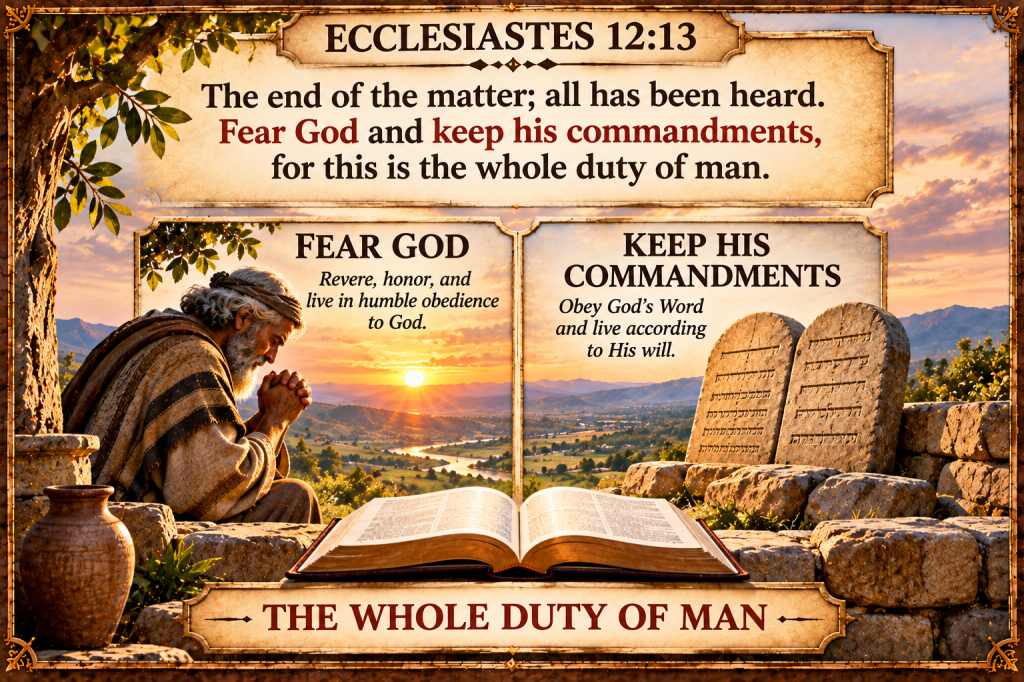
image Ecclesiastes 12:13
dv1024-Daily Verse
Author: Stephen Weller
Facilitator: Stephen Weller
2,259 words, 12 minutes read time
Darkness Can Not Overcome Light
Encouragement
John 1:5 encourages believers that God’s light is stronger than any darkness.
In context, “light” refers to the life, truth, and presence of Jesus Christ, while “darkness” represents sin, evil, suffering, confusion, and spiritual blindness. The verse teaches that no matter how powerful darkness may appear, it cannot overcome God’s light.
Some encouraging applications are:
- When you feel discouraged, God’s light has not been extinguished. He is still at work even when circumstances seem dark.
- When you face uncertainty, Christ provides truth and direction that darkness cannot erase.
- When battling sin or temptation, God’s power is greater than the forces that oppose Him.
- When the world seems troubled, the victory of God’s light is assured.
A simple devotional thought is:
The darkness may be real, but it is never ultimate. God’s light continues to shine, and darkness cannot conquer it.
This verse offers hope that God’s presence, truth, and salvation remain constant, regardless of how difficult or dark a situation may seem.
Bible Lesson
The light shines in the darkness, and the darkness has not overcome it. (John 1:5 ESV)
1 “In the beginning was the Word, and the Word was with God, and the Word was God. 2 He was in the beginning with God. 3 All things were made through him, and without him was not anything made that was made. 14 And the Word became flesh and dwelt among us, and we have seen his glory, glory as of the only Son from the Father, full of grace and truth.” (John 1:1 – 3, 14 ESV). The Son of God, who spoke the universe into existence, is the Word who through a virgin birth took on human flesh and was named Jesus. “In him was life, and the life was the light of men” (verse 4).
There are two meanings to “light” and “darkness”; one is physical and the other is spiritual. The sun and a lamp provide light that removes the condition of darkness so we can see things around us. Paul relates light to the gospel: 3 “And even if our gospel is veiled, it is veiled to those who are perishing. 4 In their case the god of this world has blinded the minds of the unbelievers, to keep them from seeing the light of the gospel of the glory of Christ, who is the image of God” (2 Corinthians 4:3 – 4 ESV).
The gospel is about Jesus and his provision for our salvation. Those who, through faith in Jesus and the work he finished on the cross, are born again, Jesus provides eternal life and that life provides light that removes our spiritual blindness. That light is spiritual insight and understanding, provided by the Holy Spirit, that removes the spiritual darkness that blinds the minds of unbelievers.
Once the Holy Spirit enters us at spiritual birth, light is provided that will never be extinguished. The powers of darkness can try as hard as they can, but they will fail to provide a darkness that can overcome the light that God provides.
Questions with Answers
John 1:5 — The Light Shines in the Darkness
Discussion Questions
Key Verse — John 1:5 (ESV)
“The light shines in the darkness, and the darkness has not overcome it.”
1. What does the light represent in John 1:5?
Answer: The light represents Jesus Christ, the eternal Word of God, who brings divine truth, holiness, righteousness, and spiritual life into a world darkened by sin. In John 1:4, the apostle declares that life was in Christ and that His life was the light of men. This establishes that Jesus is not merely someone who teaches about the light; He is the source of the light itself. His presence reveals the character of God, exposes the reality of sin, and illuminates the path to salvation. Throughout John’s Gospel, light is closely associated with truth, life, and the revelation of God. In John 8:12, Jesus identifies Himself as the light of the world, promising that those who follow Him will not walk in darkness but will have the light of life. Therefore, the light in John 1:5 represents the divine presence and saving revelation of Jesus Christ, who offers hope and eternal life to a spiritually lost world.
2. What does the darkness symbolize in this verse?
Answer: The darkness symbolizes the spiritual condition of humanity apart from God, including sin, unbelief, ignorance of divine truth, and opposition to righteousness. Since the fall of humanity, sin has separated people from fellowship with God and distorted their understanding of His character and purposes. Darkness describes both the absence of spiritual understanding and the active resistance of sinful humanity to God’s truth. John 3:19–20 explains that people loved darkness rather than light because their works were evil. This reveals that spiritual darkness is not simply a lack of knowledge but also a moral condition in which individuals resist God’s authority. Nevertheless, John 1:5 emphasizes that darkness cannot extinguish the light of Christ. Although evil remains active in the world, it cannot defeat God’s redemptive purposes or prevent His truth from accomplishing what He intends.
3. What is the significance of the statement that the light “shines” in the darkness?
Answer: The word “shines” emphasizes the continuing power and presence of Christ’s light in a world affected by sin. John does not describe the light merely as something that appeared briefly in history and then disappeared. Instead, he presents it as an enduring reality that darkness cannot extinguish. Jesus entered human history through the incarnation, revealing God’s glory, truth, and grace. His earthly ministry demonstrated this light through His teaching, miracles, compassion, and perfect obedience to the Father. Even His crucifixion, which appeared to be a victory for darkness, became the means through which God’s saving purpose was accomplished. His resurrection demonstrated that death and evil could not defeat Him. Today, Christ’s light continues to shine through the proclamation of the gospel, the work of the Holy Spirit, and the transformed lives of believers. The continuing light assures Christians that God’s truth remains powerful regardless of the spiritual darkness surrounding them.
4. What does John mean when he says that the darkness has not overcome the light?
Answer: John’s declaration emphasizes the absolute superiority of Christ over the powers of sin, evil, and spiritual darkness. The Greek word translated “overcome” can also carry the meaning of grasping or comprehending, suggesting that darkness neither fully understands nor successfully defeats the light. The ESV emphasizes the victorious nature of Christ’s light. Throughout Jesus’ earthly ministry, He encountered opposition from religious authorities, rejection by unbelievers, betrayal, and ultimately crucifixion. Yet none of these events defeated God’s plan of redemption. Instead, Christ’s death and resurrection accomplished the salvation God had promised. The darkness could oppose the light, but it could not extinguish it. This truth provides believers with confidence that evil does not possess ultimate authority over creation or human history. Jesus Christ remains victorious, and His kingdom will ultimately prevail over every form of darkness.
5. How does John 1:5 relate to the conflict between good and evil throughout Scripture?
Answer: John 1:5 introduces a major biblical theme: the conflict between God’s righteousness and the forces of sin and evil. This conflict begins in Genesis 3, when humanity falls into sin through disobedience, bringing spiritual darkness into human experience. Throughout the Old Testament, God repeatedly promises deliverance and restoration, revealing that darkness will not have the final victory. Isaiah 9:2 anticipates a great light shining upon those who walk in darkness, a prophecy fulfilled through the coming of Jesus Christ. In the New Testament, Jesus confronts the consequences of sin through His teaching, healing, deliverance, death, and resurrection. Colossians 1:13–14 describes believers as being delivered from the domain of darkness and transferred into the kingdom of God’s beloved Son. Revelation 21–22 ultimately portrays the complete removal of darkness from God’s eternal kingdom, where His glory provides everlasting light. Thus, John 1:5 connects the beginning of Christ’s earthly revelation with the ultimate triumph of God’s redemptive plan.
6. Why do some people reject the light of Christ even though it offers truth and life?
Answer: Scripture teaches that people often reject Christ’s light because it exposes their sin and challenges their desire for independence from God. John 3:19–21 explains that those who practice evil avoid the light because they do not want their works exposed. The problem is therefore deeper than intellectual disagreement; it involves the human heart and its relationship to God’s authority. Jesus calls people to repentance, faith, and obedience, requiring them to acknowledge their need for forgiveness and transformation. Human pride, attachment to sinful behavior, worldly influences, and spiritual blindness can all contribute to resistance against His truth. Nevertheless, God’s grace continues to call sinners into the light through the gospel. The Holy Spirit works to convict people of sin and reveal their need for Christ. Those who respond in faith discover that the light they once resisted becomes the source of forgiveness, freedom, and eternal life.
7. How does the victory of Christ’s light provide encouragement to believers facing difficult circumstances?
Answer: John 1:5 reminds believers that darkness, regardless of its apparent strength, cannot overcome Jesus Christ. Christians may experience suffering, persecution, disappointment, temptation, or seasons of spiritual uncertainty, but these circumstances do not diminish Christ’s authority or faithfulness. The light continues to shine even when human circumstances appear overwhelming. Jesus assured His disciples in John 16:33 that they would experience tribulation in the world but could take courage because He had overcome the world. His victory provides the foundation for Christian hope. Believers do not depend upon favorable circumstances to maintain their confidence in God; they depend upon the unchanging character and completed redemptive work of Christ. Even when the path ahead is unclear, God’s Word provides guidance, His Spirit supplies strength, and His promises establish hope. The darkness of present difficulties cannot cancel the eternal victory secured through Jesus Christ.
8. How should believers reflect the light of Christ in their daily lives?
Answer: Believers are called to reflect the light of Christ by demonstrating His truth, righteousness, love, and compassion in their relationships and conduct. Although Jesus alone is the ultimate source of spiritual light, those who belong to Him become witnesses through whom His character is displayed. In Matthew 5:14–16, Jesus describes His followers as the light of the world and instructs them to let their light shine before others so that God will be glorified. This responsibility involves living with integrity, practicing forgiveness, showing kindness, resisting sin, and speaking the truth in love. Christians also reflect Christ’s light by sharing the gospel and offering hope to those experiencing spiritual confusion or despair. Their lives should provide visible evidence of the transforming power of God’s grace. Reflecting the light does not mean achieving perfection through human effort; rather, it means continually depending upon Christ and allowing His truth to shape attitudes, decisions, and actions.
9. What relationship exists between John 1:5 and the promise of eternal life?
Answer: John 1:5 is closely connected to the promise of eternal life because the light that shines in darkness comes from Jesus Christ, who possesses life in Himself. John 1:4 establishes that life was in the Word and that this life was the light of men. Spiritual darkness is associated with separation from God, while the light of Christ reveals the way to reconciliation and everlasting fellowship with Him. Jesus declares in John 11:25–26 that He is the resurrection and the life, demonstrating His authority over death. Through His sacrificial death and resurrection, He provides forgiveness and eternal life to all who believe in Him. The inability of darkness to overcome the light assures believers that death cannot ultimately defeat those who belong to Christ. Their eternal hope rests upon His victorious resurrection and His promise to raise them to everlasting life. Thus, John 1:5 offers assurance that the life found in Christ is stronger than the darkness of sin and death.
10. What central truth should Christians remember from John 1:5?
Answer: The central truth of John 1:5 is that Jesus Christ is the victorious and enduring light of God, and no power of darkness can overcome Him. His light reveals divine truth, exposes sin, offers salvation, and provides hope to a fallen world. Although spiritual darkness continues to influence human hearts and societies, it cannot extinguish Christ’s light or frustrate God’s eternal purposes. This verse calls believers to place their confidence in Jesus rather than in changing circumstances or human strength. It also challenges them to walk in His truth and reflect His character before others. The assurance that darkness cannot overcome the light provides courage in adversity, perseverance in faith, and confidence in God’s ultimate victory. Christians can face an uncertain world with lasting hope because the light of Christ continues to shine and will never be extinguished.
Concluding Truth
The darkness may oppose the light, but it can never defeat it. Jesus Christ entered a world broken by sin and brought the light of God’s truth, grace, and salvation. His death and resurrection established a victory that no earthly power, spiritual opposition, or human failure can overturn. Those who trust in Him are called to walk in His light, reflect His character, and remain confident in His promises. John 1:5 reminds every believer that darkness is temporary, but the light of Christ is eternal.


Leave a Reply