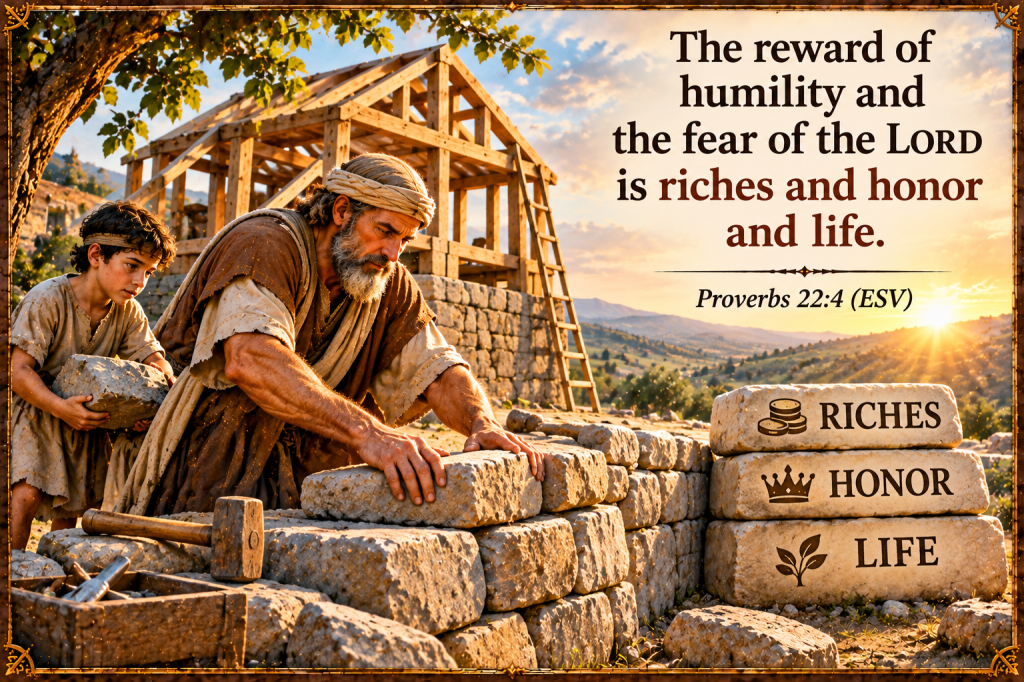
dv1106-Daily Verse
Author: Stephen Weller
Facilitator: Stephen Weller
2,127 words, 11 minutes read time
The Reward for Humility
Encouragement
Proverbs 22:4 (ESV):
“The reward for humility and fear of the Lord is riches and honor and life.”
This verse provides encouragement by reminding us that God’s values are different from the world’s. Rather than urging us to pursue status, wealth, or recognition on our own, it teaches that humility and reverence for God are the path to true blessing.
Some encouraging lessons include:
- God notices humble hearts. Even when humility goes unnoticed by others, God sees it and values it.
- Obedience is never wasted. A life lived in reverence for the Lord may not always bring immediate rewards, but God promises that faithfulness has lasting value.
- True riches are more than money. The “riches” mentioned can include spiritual blessings, contentment, wisdom, strong relationships, and God’s provision.
- Honor comes from God. Rather than seeking the approval of people, believers can trust God to lift them up in His time.
- Life is found in God’s ways. Walking with the Lord leads to a deeper, fuller, and more meaningful life both now and eternally.
Encouraging thought:
When you choose humility and place God first, you can trust that He is working for your good. The rewards He gives may not always look the way the world expects, but they are far more valuable because they come from His loving hand.
Bible Lesson
The reward for humility and fear of the Lord is riches and honor and life. (Proverbs 22:4 ESV)
What is humility? It is freedom from pride and arrogance. You know that in your flesh you are inadequate, yet you also know who you are in Christ. In Ephesians 4:2, humility is associated with gentleness, patience and love. In Colossians 3:12, humility is associated with meekness, which is power and strength under control. Jesus had the power to speak the universe into existence but restrained that power and allowed himself to be nailed to a cross to die.
“The fear of God refers to fear or a specific sense of respect, awe, and submission to a deity” (Wikipedia). To fear God is to have the proper reverence and awe for him so that we do whatever is required of us to serve him.
What are these riches and honor and life that is to be the reward for humility and the fear of the Lord? As we humble ourselves before God and fear the consequences of our sin, we come to faith in the finished work of Jesus on the cross and receive the gift of salvation. The riches are the inheritance we have waiting for us in heaven. The honor is being seated in the heavenlies with Jesus and the life is that which we receive when we are born spiritually.
This is simply an illustration to emphasize that the rewards should be seen primarily in a spiritual context, not in an earthly one. Our reward for humility and the fear of the Lord in this life may be poverty, dishonor and suffering and even death. We need only to look at believers living in countries of persecution to see this, but in Christ they have riches, honor and life.
Questions with Answers
Proverbs 22:4 — The Reward of Humility and the Fear of the Lord
Key Verse — Proverbs 22:4 (ESV)
“The reward for humility and fear of the LORD is riches and honor and life.”
Questions of Understanding
1. What is the central message of Proverbs 22:4?
Answer: Proverbs 22:4 teaches that humility and reverence for God are foundational qualities of a wise and righteous life. Humility involves recognizing our dependence upon God, while the fear of the Lord involves honoring His authority, respecting His holiness, and obeying His commands. Together, these attitudes shape a person’s character, decisions, and relationships. The verse identifies rich, honor, and life as rewards associated with godly living. These blessings should not be understood as an unconditional promise of material prosperity, but as a description of the goodness and lasting value of living according to God’s wisdom. True prosperity begins with a right relationship with God rather than the accumulation of possessions.
2. What does humility mean in the context of this proverb?
Answer: Biblical humility is the recognition that God is sovereign and that everything we possess, accomplish, or become ultimately depends upon His grace. It does not mean weakness, insecurity, or a lack of confidence. Rather, humility means having an accurate understanding of ourselves in relation to God. A humble person acknowledges personal limitations, remains willing to receive correction, and places God’s will above personal pride. Humility also influences relationships by encouraging patience, kindness, and consideration for others. Proverbs repeatedly contrasts humility with pride, teaching that pride leads toward destruction while humility opens the way to wisdom and honor. Jesus Christ provides the supreme example of humility through His willingness to serve others and submit to the Father’s will (Philippians 2:5–8).
3. What does it mean to fear the Lord, and how is this connected to humility?
Answer: The fear of the Lord refers to a deep reverence, respect, and awe for God’s holiness, authority, wisdom, and power. It is not merely being frightened of God, but recognizing who He is and responding with worship, trust, and obedience. Proverbs 9:10 teaches that the fear of the Lord is the beginning of wisdom. Humility and the fear of the Lord are closely connected because both require acknowledging God’s rightful authority over our lives. Humility recognizes our dependence upon Him, while reverence motivates us to follow His instructions. A person who genuinely fears the Lord will increasingly seek to live according to His Word rather than relying solely upon personal understanding. Together, these qualities establish the foundation for spiritual maturity and godly character.
4. What are the riches, honor, and life promised in Proverbs 22:4?
Answer: The three rewards describe the blessings commonly associated with living according to God’s wisdom. Rich may include material provision, but biblical prosperity also encompasses spiritual blessings, contentment, meaningful relationships, and the satisfaction of living within God’s purposes. Honor refers to the respect and dignity that often accompany integrity, faithfulness, and righteous conduct. Life includes physical well-being and longevity as general wisdom principles, but it also points toward the deeper quality of life found in fellowship with God. These rewards must be interpreted within the broader teaching of Scripture, which acknowledges that righteous people may experience poverty, suffering, persecution, or hardship. The proverb presents a general pattern of God’s wise ordering of life rather than a guarantee that every faithful believer will experience wealth or long life.
5. Why does God value humility more than pride or personal achievement?
Answer: God values humility because it reflects a heart that recognizes His greatness and willingly submits to His authority. Pride encourages self-sufficiency, personal glory, and resistance to correction, while humility creates a willingness to learn, repent, and depend upon God’s grace. Scripture teaches that God opposes the proud but gives grace to the humble (James 4:6). Personal achievements, abilities, and possessions are not inherently wrong, but they become spiritually dangerous when they produce arrogance or replace dependence upon God. Humility allows individuals to recognize that their talents and opportunities are gifts entrusted to them for God’s purposes. A humble person can accomplish great things while directing the glory toward God rather than self. In this way, humility is not opposed to achievement; it determines how achievement is understood and used.
6. How does Proverbs 22:4 challenge the world’s understanding of success?
Answer: The world frequently measures success through wealth, influence, recognition, possessions, and personal independence. Proverbs 22:4 presents a different foundation by identifying humility and reverence for God as the qualities that lead toward genuine blessing. Rather than encouraging individuals to pursue rich and honor as their highest goals, the proverb directs attention toward developing a godly character. Material success without wisdom or righteousness can produce pride, dissatisfaction, and spiritual emptiness. Conversely, a person with limited possessions may experience great spiritual richness through faith, peace, gratitude, and meaningful relationships. Jesus reinforced this distinction when He taught that gaining the whole world is of no ultimate benefit if a person forfeits his soul (Mark 8:36). Biblical success is therefore measured primarily by faithfulness to God rather than worldly accomplishments.
7. How can humility and the fear of the Lord influence everyday decisions?
Answer: Humility and reverence for God provide a framework for making decisions that reflect biblical wisdom. A humble person seeks God’s guidance through prayer, studies Scripture, and remains open to wise counsel rather than assuming personal judgment is always correct. The fear of the Lord encourages honesty, integrity, self-control, and obedience even when doing what is right requires sacrifice. These qualities influence financial decisions, family relationships, professional responsibilities, and responses to conflict. For example, humility helps a person admit mistakes and seek forgiveness, while reverence for God encourages choosing truthfulness over personal advantage. Proverbs 3:5–6 reinforces this principle by calling believers to trust in the Lord rather than depend entirely upon their own understanding. Daily decisions shaped by humility and reverence gradually develop a life characterized by wisdom and faithfulness.
8. Does Proverbs 22:4 promise that every humble and faithful person will become wealthy?
Answer: No. Proverbs 22:4 expresses a general principle of wisdom rather than an unconditional guarantee of financial prosperity. Throughout Scripture, faithful servants of God sometimes experience poverty, persecution, illness, and suffering. Job was described as blameless and upright, yet he endured severe losses. The apostle Paul experienced hardship and deprivation despite his faithful service to Christ. Jesus Himself lived humbly and did not pursue earthly rich. These examples demonstrate that material wealth is not a reliable measure of God’s approval. The blessings described in Proverbs 22:4 must be understood within God’s larger purposes, which include spiritual growth, eternal life, and the development of Christlike character. God may provide material abundance, but the greatest reward of humility and reverence is a life rightly ordered toward Him.
9. How does Jesus Christ demonstrate the principles taught in Proverbs 22:4?
Answer: Jesus Christ perfectly demonstrated humility and reverent obedience to the Father. Although He possessed divine glory, He willingly humbled Himself by taking the form of a servant and becoming obedient to death on the cross (Philippians 2:5–8). His humility was not weakness but the willing expression of divine love and obedience. Because of His faithfulness, God highly exalted Him and bestowed upon Him the name above every name (Philippians 2:9–11). Jesus also taught that those who humble themselves will be exalted (Matthew 23:12). His life demonstrates that true honor comes through obedience and service rather than self-promotion. The rich associated with Christ are ultimately spiritual and eternal, including redemption, reconciliation with God, and the inheritance promised to those who belong to Him.
10. What practical lessons should believers take from Proverbs 22:4?
Answer: Proverbs 22:4 encourages believers to make humility and reverence for God central priorities in their daily lives. Rather than pursuing recognition, possessions, or personal advancement as ultimate goals, believers should seek to honor God through obedience, integrity, gratitude, and service. This involves acknowledging dependence upon God’s grace, remaining teachable, accepting correction, and treating others with dignity and compassion. It also requires trusting God’s wisdom when circumstances are difficult or when the rewards of faithful living are not immediately visible. The believer’s confidence should rest not in earthly prosperity but in God’s character and promises. As humility and reverence become established habits, they produce spiritual maturity, strengthen relationships, and help believers experience the deeper blessings of walking faithfully with God.
Summary Truth
True riches, lasting honor, and meaningful life begin with humility before God and reverence for His authority. Proverbs 22:4 reminds believers that the greatest rewards are not found in worldly recognition or material possessions but in a life shaped by godly wisdom, faithful obedience, and dependence upon the Lord. Humility places God above self, while the fear of the Lord directs our choices toward His purposes. Together, these qualities provide a foundation for a life that honors God and reflects His character.


Leave a Reply