dv1107-Daily Verse
Author: Stephen Weller
Facilitator: Stephen Weller
2,406 words, 13 minutes read time
Walk with the Wise
Encouragement
Proverbs 13:20 (ESV) says:
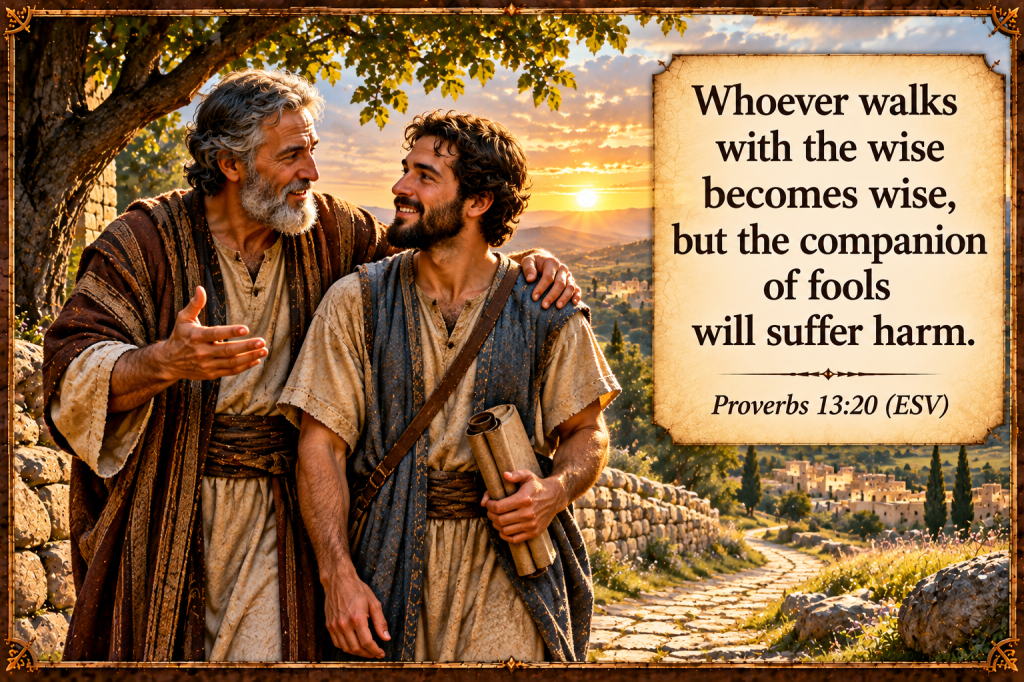
“Whoever walks with the wise becomes wise, but the companion of fools will suffer harm.”
This proverb offers several encouraging truths:
- Growth is possible.
Wisdom is not reserved for a select few. By spending time with godly, wise people and learning from them, you can become wiser yourself. Your future is not limited by your past. - Relationships shape your life.
God encourages us to seek friendships and mentors who inspire faith, integrity, and good judgment. The right companions can help you grow spiritually, emotionally, and practically.
- You are not meant to walk alone.
The verse reminds us that wisdom is often learned in community. God uses other believers, teachers, family members, and friends to guide and strengthen us. - Your choices matter.
There is hope in knowing that choosing wise influences today can lead to a better path tomorrow. Small daily decisions about who you listen to and spend time with can have lasting benefits.
Devotional Reflection
This verse encourages us to take an honest look at the people who influence us most. If we surround ourselves with those who love God and pursue wisdom, their example can help us grow closer to Christ. The promise is simple yet powerful: walk with the wise, and wisdom will rub off on you.
Prayer:
Lord, help me seek the company of wise and godly people. Give me discernment in my relationships and a teachable heart so that I may grow in wisdom and walk in Your ways. Amen.
Bible Lesson
Whoever walks with the wise becomes wise, but the companion of fools will suffer harm. (Proverbs 13:20 ESV)
Those we keep as regular companions will inevitably influence each other for good or ill. To “walk with” stresses continual action; an action that is unbroken for a period of time. One should stay in close association with the wise and move in the same direction they do. When we walk with the wise we learn from them and become wiser.
In James 3:17 (ESV), we learn that “wisdom from above is first pure, then peaceable, gentle, open to reason, full of mercy and good fruits, impartial and sincere.” We are to seek out people to walk with who seek this wisdom.
There is another kind of people that the Bible describes as fools; those who say, “There is no God.” They are corrupt, they do abominable deeds” (Psalm 14:1 ESV). If we become companions with them we will suffer harm because we will become like them and become corrupt and fall into sin.
A few proverbs about the wise and fools are: “The wise will inherit honor, but fools get disgrace.” (Proverbs 3:35 ESV); “The lips of the righteous feed many, but fools die for lack of sense.” (Proverbs 10:21 ESV); “A prudent man conceals knowledge, but the heart of fools proclaims folly.” (Proverbs 12:23 ESV); “The wisdom of the prudent is to discern his way, but the folly of fools is deceiving.” (Proverbs 14:8 ESV); and “The tongue of the wise commends knowledge, but the mouths of fools pour out folly.” (Proverbs 15:2 ESV).
Let us take care who we walk with so as to become wise and not a fool and suffer harm.
Questions with Answers
Proverbs 13:20 – The Influence of Companionship: Walking with the Wise
Key Verse: Proverbs 13:20 (ESV)
“Whoever walks with the wise becomes wise, but the companion of fools will suffer harm.”
Questions of Understanding
1. What is the central message of Proverbs 13:20?
Answer: The central message of Proverbs 13:20 is that the people we associate with have a profound influence on our character, decisions, attitudes, and spiritual development. Solomon presents a contrast between two paths: walking with the wise leads to wisdom, while keeping company with fools leads to harm. This proverb teaches that wisdom is not developed through personal study and experience alone but also through relationships with those who demonstrate godly understanding. The people we choose as companions can either strengthen our commitment to righteousness or gradually lead us away from God’s truth. Therefore, choosing our closest relationships carefully is an important part of living a life that honors God.
2. What does it mean to “walk with the wise”?
Answer: To “walk with the wise” means more than simply spending time around knowledgeable or intelligent people. In biblical terms, wisdom begins with the fear of the Lord (Proverbs 9:10), which involves reverence for God, submission to His authority, and obedience to His Word. Walking with the wise means developing meaningful relationships with individuals whose lives demonstrate spiritual maturity, humility, integrity, and sound judgment. It involves observing their conduct, listening to their counsel, learning from their experiences, and allowing their godly example to influence our own behavior. The word “walk” suggests an ongoing relationship rather than an occasional encounter. As we consistently associate with those who pursue God’s wisdom, their example helps shape our thoughts, priorities, and decisions.
3. How does spending time with wise people help us become wise?
Answer: Wisdom is often developed through observation, instruction, correction, and shared experiences. Wise companions provide examples of how biblical principles can be applied to everyday situations. They encourage thoughtful decisions, offer correction when necessary, and help us recognize dangers we might otherwise overlook. Proverbs 27:17 teaches that one person sharpens another, illustrating how relationships can strengthen character and understanding. When we observe someone responding to difficulties with patience, exercising self-control under pressure, or demonstrating forgiveness in conflict, we gain practical insight into godly living. Wise companions also challenge us to examine our motives and actions in light of Scripture. Over time, these influences can deepen our understanding of God’s truth and help us develop habits consistent with righteousness.
4. Who are the “fools” described in this proverb?
Answer: In the book of Proverbs, a fool is not necessarily someone who lacks intelligence, education, or worldly success. Rather, foolishness is primarily a spiritual and Morals condition characterized by rejecting God’s wisdom, resisting correction, acting impulsively, and disregarding the consequences of sinful behavior. Proverbs 1:7 teaches that fools despise wisdom and instruction, while Proverbs 12:15 explains that a fool considers his own way right rather than listening to wise counsel. A foolish person may possess considerable knowledge yet consistently make decisions contrary to God’s principles. Solomon warns that close companionship with such individuals can gradually influence our own values and behavior. The danger is not simply that fools make poor decisions, but that their attitudes and actions can encourage others to follow the same destructive path.
5. What does the phrase “the companion of fools will suffer harm” teach about the consequences of relationships?
Answer: This phrase teaches that relationships carry consequences beyond the immediate enjoyment of companionship. When individuals consistently associate with those who disregard wisdom, they may become involved in harmful decisions, adopt destructive habits, or experience consequences resulting from another person’s behavior. The warning emphasizes that influence is powerful and often gradual. A person may initially recognize foolish conduct as wrong but eventually become comfortable with it through repeated exposure. The harm may involve damaged relationships, compromised integrity, financial difficulties, spiritual decline, or other painful consequences. Solomon is not suggesting that every association with a foolish person inevitably produces disaster, but he is describing a general principle: close and continuing identification with foolishness places a person at serious risk. Godly wisdom requires recognizing these dangers before they produce lasting consequences.
6. How does Proverbs 13:20 relate to the importance of seeking godly counsel?
Answer: Proverbs 13:20 reinforces the biblical principle that wise counsel is essential for making sound decisions. Proverbs 11:14 teaches that there is safety in an abundance of counselors, while Proverbs 15:22 explains that plans are established through many advisers. God often uses mature believers, faithful teachers, experienced leaders, and trusted friends to provide insight that helps us understand situations more clearly. Seeking godly counsel demonstrates humility because it acknowledges that our personal understanding is limited. Wise advisers can identify weaknesses in our reasoning, offer perspectives we have not considered, and encourage decisions consistent with Scripture. However, not all advice is equally valuable. Counsel must be evaluated according to God’s Word rather than accepted merely because it comes from someone we respect. Walking with the wise involves developing relationships with people who consistently direct us toward God’s truth.
7. Does this proverb mean Christians should avoid relationships with unbelievers or spiritually immature people?
Answer: No. Proverbs 13:20 does not teach that believers should isolate themselves from unbelievers or refused relationships with those who lack spiritual maturity. Jesus Himself associated with tax collectors, sinners, and people rejected by society, demonstrating compassion and offering them the opportunity to experience God’s grace. Christians are called to love others, share the gospel, and serve those in need. The distinction lies between maintaining relationships for the purpose of demonstrating Christ’s love and allowing ungodly influences to shape our values and conduct. Jesus engaged with sinners without adopting their sinful behavior. Similarly, believers can maintain friendships and meaningful contact with people from different backgrounds while remaining firmly grounded in biblical truth. The proverb encourages discernment regarding whose counsel, example, and influence we allow to guide our lives.
8. How can we recognize whether our closest companions are influencing us toward wisdom or foolishness?
Answer: One practical way to evaluate relationships is to consider how they affect our attitudes, decisions, and spiritual priorities. Wise companions generally encourage honesty, responsibility, humility, self-control, forgiveness, and faithfulness to God. They are willing to speak truth even when it is uncomfortable and demonstrate genuine concern for our long-term well-being. Foolish influences, by contrast, may encourage compromise, dishonesty, pride, resentment, reckless behavior, or disregard for biblical principles. We should ask whether our relationships strengthen our desire to obey God or make disobedience seem acceptable. Another important consideration is how we respond after spending time with particular individuals. From we feel encouraged to pursue righteousness, or are we increasingly drawn toward attitudes and behaviors that conflict with Scripture? These observations can help us determine which relationships deserve our greatest investment of time and trust.
9. How does the teaching of Proverbs 13:20 apply to modern influences such as social media, entertainment, and online communities?
Answer: Although Proverbs 13:20 was written long before modern technology, its principle applies directly to the influences that shape our thinking today. Companionship is no longer limited to people we encounter face-to-face. Social media personalities, online communities, podcasts, entertainment, and Digital conversations can exert significant influence over our beliefs, attitudes, and behavior. Repeated exposure to certain ideas can gradually normalize values that either support or contradict biblical teaching. Just as Solomon encouraged careful selection of personal companions, believers should exercise discernment regarding the voices they regularly invite into their lives. Philippians 4:8 encourages Christians to focus their thoughts on what is true, honorable, just, as well, lovely, and commendable. Applying Proverbs 13:20 in a Digital world means intentionally choosing influences that encourage wisdom, strengthen faith, and promote godly character.
10. How does Jesus Christ provide the ultimate example of the wisdom described in Proverbs 13:20?
Answer: Jesus Christ is the perfect expression of divine wisdom and the ultimate example of righteous living. First Corinthians 1:24 identifies Christ as the wisdom of God, while Colossians 2:3 teaches that all the treasures of wisdom and knowledge are hidden in Him. Throughout His earthly ministry, Jesus demonstrated wisdom through His teaching, compassion, humility, obedience to the Father, and responses to opposition. His life reveals that true wisdom involves more than making good decisions; it includes living in complete harmony with God’s will. Believers grow in wisdom by studying Christ’s teachings, following His example, and submitting their lives to His authority. While godly companions can provide valuable Encouragement and guidance, their wisdom remains imperfect. Jesus alone provides the flawless standard of truth and righteousness. Walking with Christ through faith, prayer, Scripture, and obedience is the foundation for developing the wisdom that Proverbs 13:20 encourages.
11. What responsibility do believers have to become wise companions for others?
Answer: Proverbs 13:20 challenges believers not only to seek wise companions but also to become sources of godly influence in the lives of others. If walking with the wise helps people become wise, then every Christian has an opportunity to encourage spiritual growth through personal example, faithful instruction, and loving relationships. This responsibility is particularly important within families, churches, friendships, and mentoring relationships. Parents influence children through their conduct, mature believers encourage younger Christians, and friends strengthen one another through accountability and prayer. Becoming a wise companion requires continued growth in biblical understanding, humility, patience, and integrity. It also involves a willingness to offer loving correction when necessary and to receive correction from others. Our influence should direct people toward Christ rather than toward dependence upon ourselves. In this way, wisdom becomes something we both receive and share.
12. What practical steps can we take to apply Proverbs 13:20 in our daily lives?
Answer: Applying Proverbs 13:20 begins with intentionally evaluating the influences that shape our character and decisions. We should seek relationships with people who demonstrate reverence for God, spiritual maturity, integrity, and a willingness to speak biblical truth. Participating in Bible studies, maintaining meaningful Christian friendships, learning from mature believers, and seeking godly counsel are practical ways to walk with the wise. At the same time, we should recognize relationships or influences that repeatedly encourage compromise and establish appropriate boundaries where necessary. Personal spiritual disciplines such as prayer, Scripture reading, and reflection help us develop the discernment needed to distinguish wisdom from foolishness. Finally, we should examine our own influence on others, asking whether our words and actions encourage them toward Christ. The goal is not merely to avoid harmful relationships but to cultivate a life surrounded by, shaped by, and contributing to godly wisdom.
Concluding Thought
Proverbs 13:20 reminds us that the direction of our lives is influenced by the company we keep. Wisdom grows through relationships that encourage reverence for God, obedience to His Word, and righteous living. Foolish companionship, however, can gradually weaken our judgment and lead to painful consequences. The passage challenges us to choose our influences carefully while becoming examples of godly wisdom ourselves. Above all, it points us toward Jesus Christ, the perfect source of wisdom, whose teachings and example provide the foundation for a life that honors God.


Leave a Reply